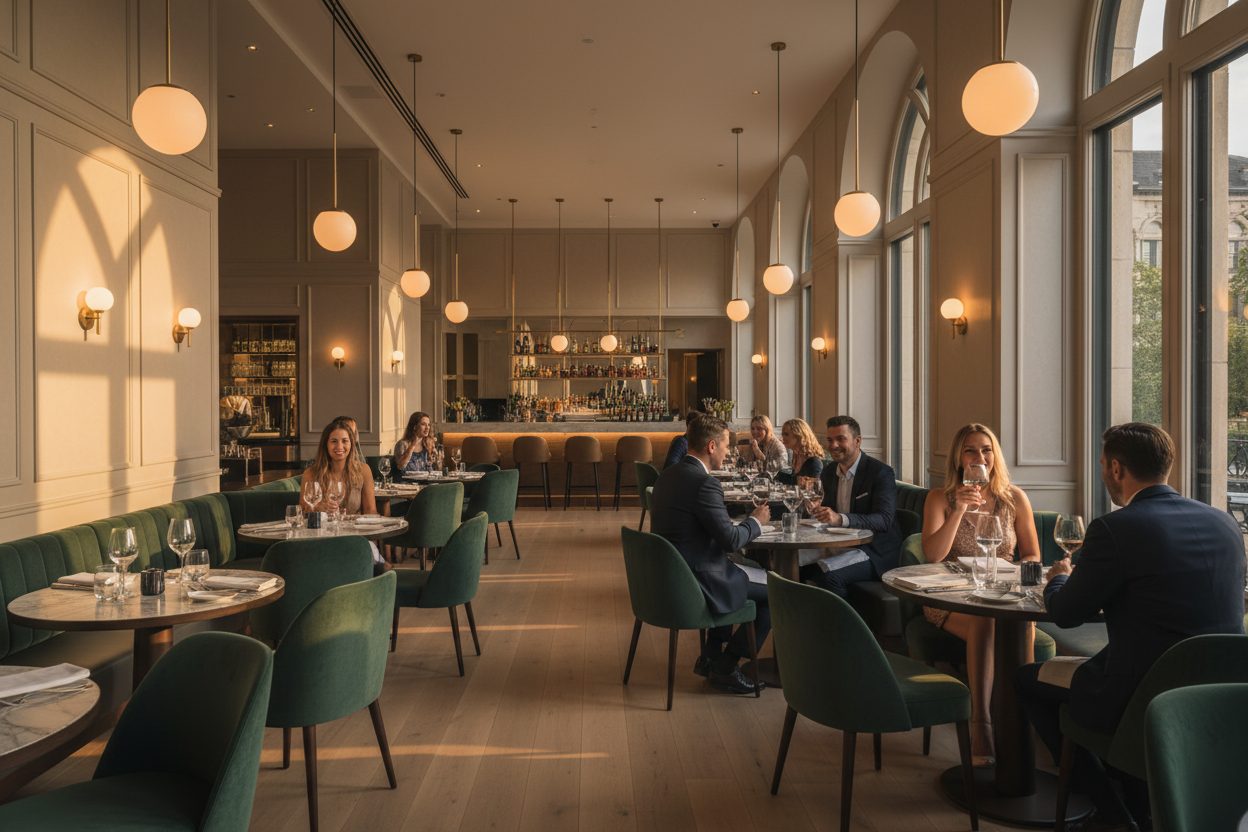
Some industries respond more strongly to discovery than others.
Hospitality and experience brands sit at the top of that list. Restaurants, immersive venues, attractions and cultural spaces rely heavily on being found at the right moment. Unlike utility products, they are not searched for daily out of necessity. They are chosen when interest is sparked.
This is precisely why discovery marketing, and particularly creator-led discovery, carries disproportionate commercial weight in this category.
The Nature of Experience-Led Decision Making
Hospitality and experience brands operate within what can be described as discretionary intent. People do not wake up knowing exactly which restaurant, theatre concept or immersive venue they will visit next month. The decision is influenced by suggestion, inspiration and social context.
Discovery shapes demand before search behaviour ever begins.
When audiences encounter a compelling experience in a trusted discovery environment, it shifts from unknown option to mental shortlist. That transition is commercially significant.
“That transition is commercially significant”
Visibility at the Moment of Inspiration
Traditional paid ads often rely on interrupting behaviour. Discovery platforms operate differently. They meet audiences when they are open to new ideas.
For hospitality brands, this alignment matters. Dining, events and experiences are inherently social decisions. They are shared, discussed and recommended. Discovery content mirrors how people naturally plan leisure time.
Creator-led campaigns that appear within this context feel less like advertising and more like recommendation.
Why Context Drives Footfall
Experience brands ultimately measure success in bookings, reservations and visits. The route from awareness to action is rarely linear.
Discovery content supports that journey by introducing the experience within an environment that already carries trust. When the narrative highlights atmosphere, location and practical details, it reduces friction in decision making.
In hospitality, subtle persuasion often outperforms overt selling.
“In hospitality, subtle persuasion often outperforms overt selling”
Practical Implications
- ›Prioritise discovery environments where leisure planning already happens
- ›Frame the experience as part of a broader social narrative
- ›Highlight practical cues such as location, atmosphere and timing
- ›Focus on credibility and context rather than aggressive promotion
- ›Measure uplift through behavioural signals, not only impressions
Common Misconceptions
A frequent misconception is that hospitality marketing must always be performance-led. While performance channels have a role, they often capture existing demand rather than create it.
Another misconception is that exposure alone drives footfall. Exposure without contextual credibility rarely translates into meaningful action.
Discovery, when executed well, bridges that gap.
Strategic Takeaway
Hospitality and experience brands benefit most from discovery because their category depends on inspiration.
When creator-led campaigns align with trusted discovery environments, they influence consideration long before audiences actively search. This early-stage positioning strengthens long-term commercial resilience.
At Origin Collective, we are selective about which hospitality brands we recommend within discovery-led campaigns. Alignment between experience, audience expectation and narrative credibility determines whether exposure converts into real-world impact.
For experience-led brands, discovery is not supplementary marketing. It is foundational to sustained demand.